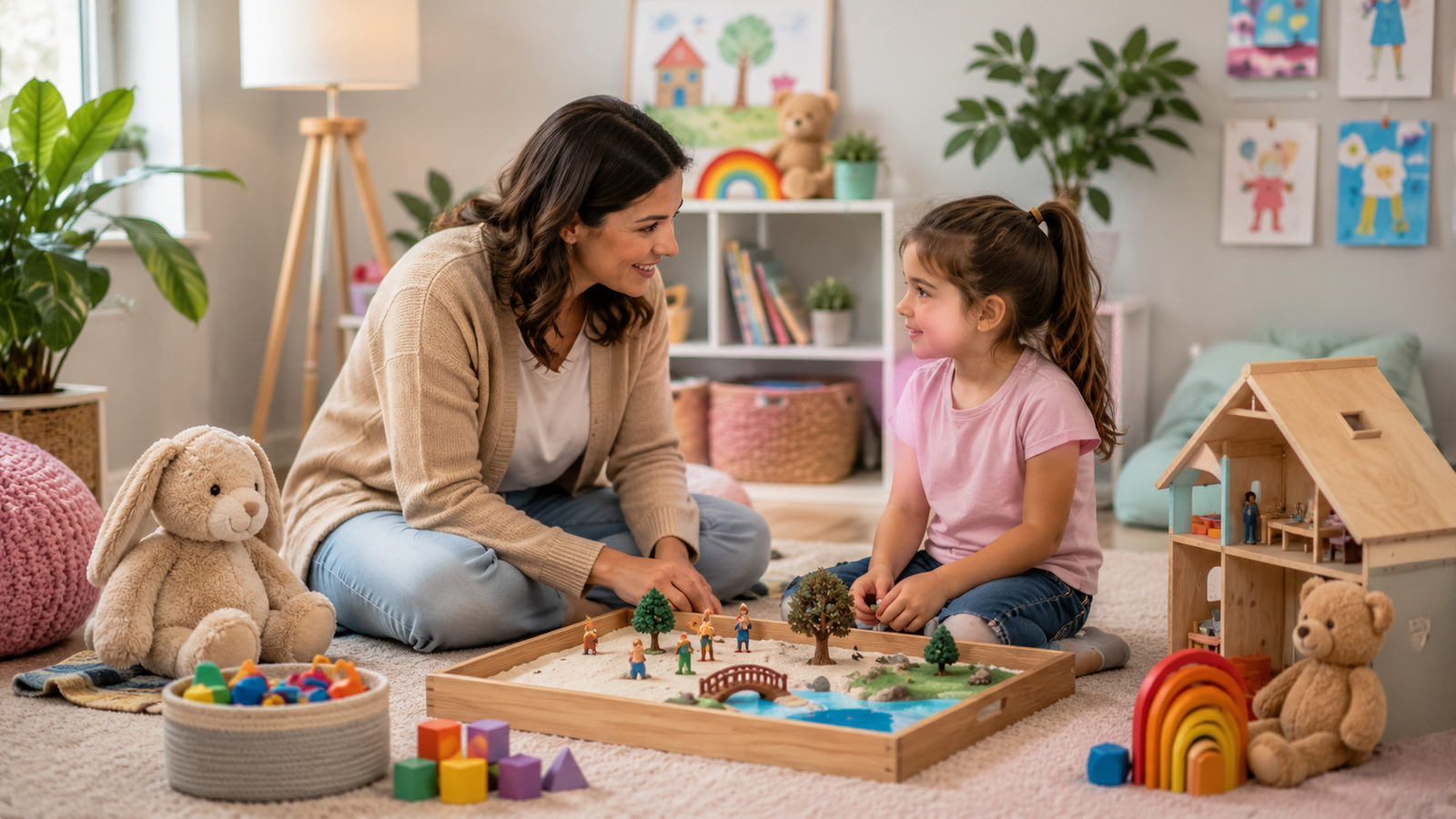
Children do not always have the words or confidence to explain their emotions, worries, or difficult experiences directly. They may communicate through behavior, imagination, games, drawing, or other forms of play. Play therapy for kids provides a structured and supportive environment where children can use play to express feelings, explore experiences, and develop healthier ways of coping with emotional or behavioral challenges.
Play is a natural part of childhood development. Through play, children learn about relationships, communicate ideas, practice problem solving, and make sense of their surroundings. When guided by a trained professional, these natural activities can become an important part of the therapeutic process.
Understanding Play Therapy
Play therapy is a therapeutic approach designed to help children communicate and process experiences through play. Instead of relying entirely on verbal conversations, the therapist provides age appropriate activities and materials that encourage children to express themselves.
The approach can be adapted according to the child’s age, personality, communication style, and individual needs. Some children may enjoy imaginative games, while others may prefer drawing, storytelling, building activities, or role playing.
The therapist observes how the child interacts with the materials and responds to different situations. These observations can provide useful information about the child’s emotions, relationships, concerns, and coping patterns.
The goal is not simply to keep a child occupied. Therapeutic play is intentional and guided by professional knowledge.
Why Play Is Important for Children
Play is one of the primary ways children learn about the world. Young children may not have the vocabulary needed to explain complex emotions, but they can often communicate those feelings through actions and imaginative activities.
For example, a child who is experiencing worry may repeatedly act out situations involving separation, conflict, or safety. Another child may use drawings or stories to communicate experiences that they cannot explain directly.
Play can create a less intimidating way for children to explore these experiences.
It also allows children to practice different responses to challenging situations. Through guided activities, they can explore choices, consequences, communication, and problem solving in an environment where mistakes are part of learning.
How Play Therapy Works
During therapy, the child typically interacts with a carefully selected range of toys, games, creative materials, or other activities. The therapist creates an environment where the child can express themselves while maintaining appropriate therapeutic boundaries.
The therapist may follow the child’s lead during some activities and introduce structured activities during others. The specific approach depends on the child’s needs and the therapeutic goals.
Over time, patterns may emerge in the child’s play. The therapist can use these observations alongside conversations with parents and other relevant information to understand the child’s experiences.
The therapist may also teach skills that help the child manage emotions, communicate more effectively, and respond to difficult situations.
Creating a Comfortable Environment
A comfortable environment is important because children may initially feel uncertain about meeting a therapist.
The therapy space is often designed to feel welcoming and age appropriate. Having access to familiar forms of play can make it easier for a child to become comfortable.
The therapist may begin by allowing the child to explore the room and materials. There may not be pressure to immediately discuss personal concerns.
Building trust can take time. Some children become comfortable quickly, while others may need several sessions before they begin expressing themselves openly.
Patience is an important part of the process.
Helping Children Express Emotions
Children experience many of the same emotions as adults, but they may express them differently. Anger, sadness, fear, frustration, confusion, and disappointment can sometimes appear through changes in behavior.
A child may become withdrawn, have difficulty communicating, or act out at home or school.
Play can provide another way to explore these emotions. A child might use characters, stories, drawings, or games to represent feelings and experiences.
The therapist can help the child identify and understand these emotions while developing appropriate ways to express them.
Supporting Emotional Regulation
Learning how to manage emotions is an important part of childhood development.
Children may sometimes experience emotions that feel overwhelming. They may react impulsively because they have not yet developed the skills needed to regulate strong feelings.
Therapeutic activities can help children recognize emotional signals and practice coping strategies.
A therapist may introduce breathing exercises, problem solving activities, communication techniques, or other age appropriate strategies.
The child can practice these skills during sessions and gradually apply them in everyday situations.
Addressing Behavioral Challenges
Behavior is often a form of communication. When children are unable to explain what they are experiencing, their behavior may provide clues.
Frequent frustration, aggression, withdrawal, difficulty following routines, or changes in behavior can sometimes indicate that a child is struggling with something emotionally.
Therapy can help explore what may be contributing to these behaviors.
Rather than focusing only on stopping unwanted behavior, the therapeutic process can help identify underlying emotions, needs, and patterns.
Children can then learn alternative ways to communicate and respond.
Supporting Children Through Major Life Changes
Children may experience stress when their environment changes. Moving to a new home, changing schools, experiencing family changes, or adjusting to other major events can be challenging.
Even when adults believe a change is manageable, children may experience uncertainty or worry.
Play can help children explore these changes in a way that feels understandable to them.
Through stories and role playing, a child can act out situations and explore different responses. This may help them make sense of what is happening around them.
Helping With Social Skills
Social interactions can be challenging for some children. They may struggle with sharing, taking turns, communicating needs, managing disagreements, or understanding another person’s perspective.
Therapeutic play can provide opportunities to practice these skills.
Games can teach turn taking and patience. Role playing can allow children to practice conversations. Cooperative activities can encourage communication and problem solving.
These skills can eventually be applied to interactions with parents, siblings, teachers, and peers.
The Role of Parents
Parents play an important role in the therapeutic process.
Depending on the child’s circumstances and the therapist’s approach, parents may participate in discussions before or after sessions. The therapist may ask about changes in behavior, family circumstances, school experiences, and other relevant information.
Parents may also receive suggestions for supporting the child’s emotional development at home.
This does not mean parents are expected to become therapists. Instead, they can learn practical ways to create supportive routines, encourage communication, and respond consistently to emotional needs.
What Happens During an Initial Session?
The first session may involve gathering information about the child’s development, behavior, family environment, and current concerns.
The therapist may speak with the parent or caregiver before meeting the child, depending on the situation.
When the child joins the session, the therapist may introduce the available activities and allow the child to explore.
The goal is generally to begin building trust and understanding rather than expecting the child to immediately discuss difficult experiences.
The therapist may observe how the child interacts with different materials and responds to different situations.
How Long Does Therapy Take?
The length of therapy varies from child to child. Some children may need support for a relatively short period, while others may benefit from longer term counseling.
Several factors can influence the process, including the child’s age, concerns, family circumstances, goals, and response to therapy.
Progress is usually evaluated over time rather than after one session.
Parents can discuss expectations and progress with the therapist and ask questions if they are unsure about the treatment plan.
Signs a Child May Benefit From Therapy
Every child has occasional emotional or behavioral difficulties. However, persistent changes may indicate that additional support could be helpful.
Parents may consider professional support when a child experiences ongoing changes in mood, behavior, communication, sleep, school participation, relationships, or daily routines.
Other signs may include frequent emotional outbursts, persistent fear, social difficulties, withdrawal, or difficulty adjusting to significant changes.
These signs do not automatically indicate a specific problem. They simply suggest that a conversation with a qualified professional may be useful.
Creating a Safe Space for Expression
Children benefit from environments where they feel safe expressing emotions without fear of immediate judgment.
Therapy can provide a structured space where children can explore experiences and learn that difficult emotions are manageable.
The therapist can help children understand that emotions themselves are not wrong. What matters is learning appropriate ways to express and manage them.
This can contribute to emotional confidence as children develop.
Developing Problem Solving Skills
Problem solving is another important area that therapy can support.
Through games and imaginative activities, children can explore different solutions to challenges. They can learn to consider choices, consequences, and alternative responses.
These activities can help children become more flexible when facing difficulties.
Instead of immediately reacting to frustration, they can gradually learn to pause, consider options, and choose a more effective response.
Building Confidence
Difficult emotional experiences can affect a child’s confidence. A child who frequently struggles with behavior, friendships, school, or family interactions may begin to feel that something is wrong with them.
Therapeutic support can help children recognize their strengths and develop new skills.
When children successfully practice communication, emotional regulation, or problem solving, they can begin to develop greater confidence in their ability to handle challenges.
Positive experiences during therapy can support this process.
Working With Schools and Other Support Systems
Depending on the child’s circumstances and with appropriate consent, therapists may coordinate with parents, schools, or other professionals.
This can help ensure that adults supporting the child understand relevant needs and strategies.
Consistency across different environments can make it easier for children to practice new skills.
However, communication with outside professionals should always follow appropriate privacy and consent requirements.
Final Thoughts
Play therapy for kids offers children a developmentally appropriate way to communicate, explore emotions, and work through challenges. By using play, imagination, creative activities, and structured therapeutic techniques, children can express experiences that may be difficult to explain through ordinary conversation.
The process can support emotional awareness, communication, problem solving, social skills, and coping abilities. It can also provide parents with greater insight into how their child is experiencing certain situations.
Every child is different, so the therapeutic approach should be based on the child’s individual needs and circumstances. If a child is experiencing persistent emotional or behavioral changes, speaking with a qualified professional can help determine whether therapy may be appropriate.
The purpose of therapy is not to change a child’s personality. Instead, it is to help children understand themselves, communicate their needs, manage difficult emotions, and develop skills that can support their wellbeing as they grow.