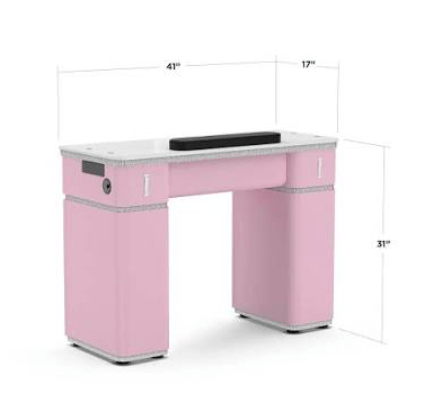
Nail table size represents a critical decision affecting facility comfort, capacity, and revenue potential. Size selection must balance client comfort, technician efficiency, facility capacity, and professional positioning. Understanding how table size impacts these factors enables informed decisions supporting business objectives.
Small Nail Table Sizing for Compact Facilities
Small nail tables measuring 34-38 inches wide by 46-50 inches long suit space-constrained facilities or high-volume, quick-service business models. Compact sizing conserves floor space enabling more stations within limited areas. However, compact sizing may compromise comfort for larger clients or create perceptions of nail table size budget-oriented service. Size selection should align with target clientele and positioning.
Standard Nail Table Sizing and Professional Balance
Standard professional nail tables measure 40-44 inches wide by 52-56 inches long, representing optimal balance between comfort and space efficiency. Standard sizing accommodates most clients comfortably while maintaining reasonable space per station. This sizing is most appropriate for full-service professional salons.
Large Nail Table Sizing for Premium Positioning
Premium facilities selecting larger nail tables measuring 44-48 inches wide by 56-60 inches long create spacious, luxurious service environments. Larger sizing appeals to affluent clientele prioritizing comfort and creates perceptions of upscale positioning. Larger tables support premium pricing justified by superior comfort and perception of quality.
Service Quality and Table Size Correlation
Adequate table sizing enables superior service quality through: comfortable hand positioning, proper technician access, organized product staging, professional appearance, and client comfort throughout service. Undersized tables compromise one or more of these quality factors, reducing client satisfaction and limiting pricing potential.
Capacity Planning and Size Implications
Smaller tables enable greater station density within available space, increasing capacity and potential daily revenue. However, density achieved through undersized tables compromises comfort, potentially reducing client satisfaction and repeat visits. Optimal capacity balances maximum density with minimum comfort standards.
Client Perception and Facility Positioning
Table size significantly influences facility perception even before clients experience services. Spacious-appearing facilities with appropriately sized tables create premium positioning perceptions. Cramped facilities with undersized tables communicate budget positioning regardless of actual service quality. Size selection supports specific positioning strategies.
Technician Efficiency and Comfort Impact
Adequately sized tables provide sufficient work surface and surrounding space enabling efficient technician workflow. Undersized tables require awkward positioning and movement, reducing efficiency and increasing fatigue. Proper sizing supports technician comfort directly impacting service quality and professional retention.
Revenue Impact and Pricing Justification
Table size impacts revenue potential through: client satisfaction influencing repeat visit rates, ability to command premium pricing, capacity supporting operational volume, and technician retention through comfortable working conditions. Revenue analysis should consider these comprehensive impacts rather than just capacity calculations.
Customization and Size Variety
Quality manufacturers offer nail tables in multiple sizes accommodating different facility visions. Custom sizing options enable precise matching to available space and service vision. Size flexibility ensures you can find appropriate tables without compromising comfort or functionality.
Market Positioning and Competitive Differentiation
In competitive markets, nail table sizing and the comfort it enables create differentiation advantages. Facilities offering noticeably more comfortable service environments attract clients prioritizing experience quality and supporting premium pricing. Size investment represents marketing value beyond pure functionality.
Professional guidance helps evaluate table sizing options against your specific facility space, target clientele, positioning strategy, and financial objectives. Manufacturer consultations provide technical guidance about available sizes. Visiting competitive facilities provides real-world perspective on sizing approaches and their market success.
FAQs
What nail table size is most appropriate for my salon?
Consider: your available floor space, target clientele comfort expectations, service positioning (premium vs. budget), competition in your market, and revenue objectives. These factors combined guide appropriate size selection for your specific business model.
Can I start with small tables and upgrade later to larger sizes?
Technically yes, but relocation is disruptive and expensive. Better to invest in appropriate sizing initially. Consider long-term vision rather than immediate cost savings when making size decisions.
How does nail table size affect how much I can charge for services?
Larger, more comfortable tables support higher pricing and attract clientele willing to pay premiums. Quality facilities with premium comfort standards command 20-40% pricing premiums compared to budget facilities. Size investment impacts revenue potential beyond immediate capacity.
Conclusion
Strategic nail table sizing represents important investment in client satisfaction, professional positioning, and revenue potential. By carefully evaluating your facility space, target clientele, service vision, and financial objectives, you select table sizes creating environments where clients feel valued and technicians work comfortably. Professional sizing decisions demonstrate commitment to quality and support both immediate client satisfaction and long-term business success.